Editor's Note: The Hunt for “Walking Figures”
Modern street photography is experiencing a crisis of overproduction. Never before has the street been photographed so obsessively — and never before has street photography been so saturated with visually identical images.
A friend of mine, Anzor Bukharsky, a photographer from Bukhara, once gave this phenomenon a remarkably precise name: “pictures of walking figures.” Since then, it has seemed to me perhaps the most accurate definition of a huge portion of contemporary Instagram-street photography.

This is not thoughtful geometry or minimalism. It is an endless stream of mechanical images where the pedestrian exists merely as a random object inside the frame — devoid of ideas, internal tension, or any real necessity for the image.
Street photography increasingly imitates the snapshot aesthetic, preserving its outward form while losing the essential element: the energy of observation.
The Aesthetics of the Empty Click
Today, a huge segment of street photography has turned into the visual recording of human traffic. Photographers no longer go into the street to truly see something; they go out to collect frames. This is visual fast food: images that are quickly produced, quickly consumed, and almost instantly forgotten.
Content designed not for the gaze, but for the scroll.
A whole vocabulary of recurring templates has emerged:
— a person mid-stride;
— a silhouette in a shaft of light;
— a figure against a brightly colored wall;
— a passerby reflected in a storefront window;
— a lone person photographed from behind;
— someone buried in their phone.
None of these elements are problematic on their own. The problem begins when the entire photograph is built solely around the fact that these elements exist.
The person in the frame ceases to be an individual. They become a graphic marker of composition — that very “walking figure.” The connection between subject and space disappears. There is no tension, no strangeness, no emotional state, and no sense of life. There is only the mechanical act of capture: someone walked through attractive light — the shutter fired.
When the Snapshot Ceases to Be Photography
It is important to understand: the problem is not the snapshot aesthetic itself.
With Garry Winogrand, randomness became energy. With William Klein, it became the chaos of the metropolis. With Daido Moriyama, it became anxiety, fragmentation, and the decay of urban space. Even their most accidental frames contained internal tension. They were not photographing silhouettes or nice light — they were photographing the collision between the human being and the city.
Contemporary Instagram-street, by contrast, often reproduces visual clichés about what street photography is supposed to look like rather than observing life itself. A true snapshot captures a state, not just a person.
“Pictures of walking figures” merely record the fact that somebody happened to be standing on a sidewalk.
This is why so many of these images appear technically polished yet emotionally hollow. Photographers attempt to rescue them with aggressive contrast, deep black-and-white processing, or excessive color grading, but post-processing cannot replace substance.
Archive or Visual Noise?
The paradox is that even this endless stream of repetitive images possesses a certain documentary value. Millions of nearly identical photographs become a record of the era: they document clothing, behavior, urban environments, and even the contemporary way images are consumed.
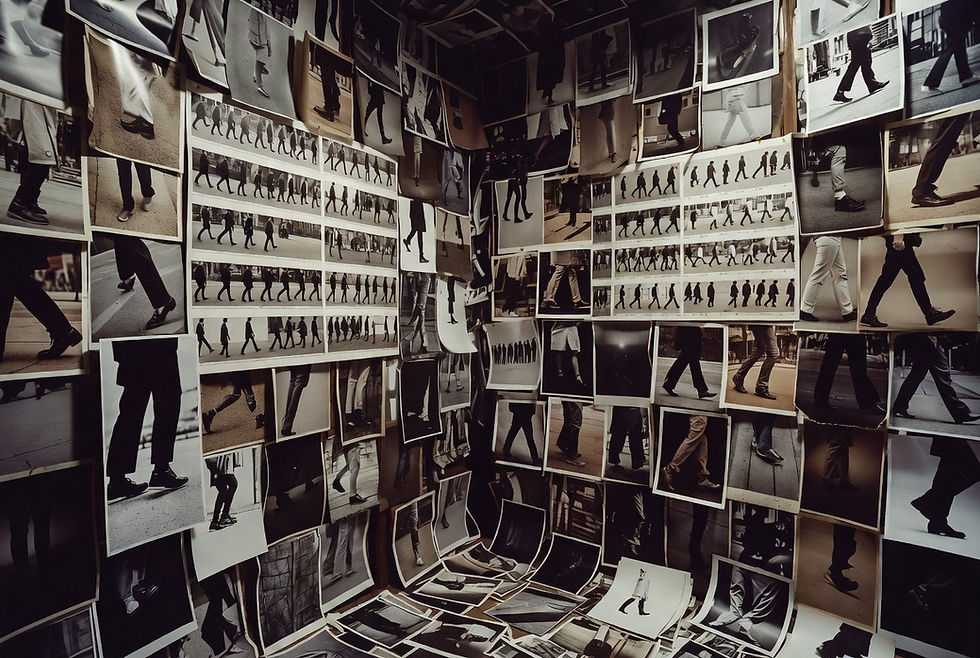
But archival value is not artistic value. Most of these frames remain visual noise — images that never truly needed to exist. Street photography does not begin when somebody walks into a beam of light. It begins when the movement of that person reveals a story, a symbol, or the exposed nerve of the city itself.
BONUS: Street Bingo — Check Your Archives
If more than three of these sound familiar, congratulations: you may already have opened hunting season for “walking figures.”
— A random passerby walking through beautiful light.
— The “perfect” stride phase.
— A lonely silhouette in fog.
— An old man in a hat.
— A single red object against a gray background.
— Somebody staring at a phone.
— A reflection in a shop window.
— An umbrella in the rain as a symbol of “depth.”
— Geometry for the sake of geometry.
— Waiting for literally anyone to “activate” the composition.
Do not delete these images. For a beginner, this is a perfectly natural stage — a way of becoming comfortable with the street, the camera, and reacting to the flow of life around you.
But eventually, it becomes important to stop simply collecting legs and start asking yourself why this frame exists at all.
“Am I photographing this person because something is genuinely happening in the frame — or because I just need to fill another memory card?”
// AZ
Redaktorun Qeydi: "Addımlayan fiqurlar" ovunda
Müasir küçə fotoqrafiyası "artıq istehsal" böhranı içindədir. Küçə heç vaxt bu qədər çox çəkilməmişdi və eyni zamanda, heç vaxt bu qədər eyni, bir-birinin təkrarı olan kadrlarla dolmamışdı.
Buxaralı fotoqraf dostum Anzor Buxarski bir dəfə bu vəziyyətə çox dəqiq ad vermişdi: «addımlayan fiqurların şəkilləri». O vaxtdan bəri mənə elə gəlir ki, müasir Instagram-street fotoqrafiyasının böyük hissəsi üçün bundan düzgün tərif yoxdur.
Söhbət heç də dərin həndəsədən və ya minimalizmdən getmir. Bu, sadəcə olaraq kadrın içində təsadüfi bir obyekt kimi görünən addımlayan piyadaların mexaniki şəkildə çəkilməsidir. Bu şəkillərdə nə ideya var, nə daxili gərginlik, nə də həmin kadrın çəkilməsi üçün hər hansı bir zərurət. Küçə fotoqrafiyası get-gedə daha çox "snapshot" estetikasını təqlid edir; formanı saxlayır, amma ən vacib şeyi — müşahidə enerjisini itirir.
Boş klik estetikası
Bu gün küçə fotoqrafiyasının böyük bir hissəsi sadəcə insan axınının vizual qeydiyyatına çevrilib. Fotoqraflar artıq küçəyə nəyisə görmək üçün yox, "kadr yığmaq" üçün çıxırlar. Bu, "vizual fastfud"dur: tez çəkilən, tez istehlak olunan və anındaca unudulan şəkillər.
Baxılmaq üçün yox, skroll üçün nəzərdə tutulmuş kontent.
Artıq əzbərlənmiş şablonlar siyahısı yaranıb:
— addım atan insan;
— işıq zolağındakı siluet;
— rəngli divar qarşısındakı fiqur;
— vitrindəki əks;
— arxadan çəkilmiş tənha adam;
— telefonuna qapılmış kimisə.
Bunların heç biri özlüyündə problem deyil. Problem o zaman başlayır ki, bütün fotoqrafiya yalnız bu elementlərin kadrda olması üzərində qurulur. İnsan artıq şəxsiyyət deyil, kompozisiyanın bir detalıdır — həmin o «addımlayan fiqurdur».
Adamla məkan arasındakı bağ itir. Nə gərginlik var, nə qəribəlik, nə də bir duyğu. Sadəcə mexaniki bir hərəkət: kimsə qəşəng işığın içindən keçdi — düymə basıldı.
Snapshot fotoqrafiya olmaqdan çıxanda
Bir şeyi anlamaq lazımdır: problem snapshot estetikasının özündə deyil. Qari Vinoqrandda təsadüfilik enerjiyə çevrilirdi. Vilyam Klaynda — şəhər xaosuna. Daido Moriyamada isə — şəhərin o narahat, parçalanmış ruhuna.
Onların ən təsadüfi kadrlarında belə daxili bir gərginlik var idi. Onlar sadəcə siluet və ya qəşəng işıq çəkmirdilər — onlar insanla şəhərin toqquşmasını çəkirdilər. Müasir Instagram-street isə həyatın özünü müşahidə etmək əvəzinə, "küçə fotosu necə olmalıdır" klişelərini kopyalayır.
Əsl snapshot adamı yox, vəziyyəti çəkir. «Fiqurların şəkilləri» isə sadəcə kiminsə səkidə olması faktını qeydə alır. Ona görə də bu kadrlar texniki tərəfdən nə qədər təmiz olsa da, emosional olaraq boşdur. Onları aqressiv kontrastla, dərin ağ-qara və ya rənglə xilas etməyə çalışırlar, amma heç bir effekt məzmunu əvəz edə bilməz.
Arxiv, yoxsa vizual küy?
Paradoks ondadır ki, hətta bu eyni tipli şəkillərin də müəyyən sənədli dəyəri var. Milyonlarla bənzər kadr dövrün sənədinə çevrilir: geyimləri, davranışı, şəhəri və şəkillərin istehlak tərzini arxivləşdirir.
Amma arxiv dəyəri hələ bədii dəyər deyil. Bu kadrların çoxu sadəcə vizual küydür, əslində çəkilməsinə heç bir ehtiyac olmayan şəkillərdir. Küçə fotoqrafiyası kiminsə işıq şüasına girməsi ilə başlamır. O, həmin insanın hərəkəti bir hekayəni, bir simvolu və ya şəhərin çılpaq sinirini göstərdiyi anda başlayır.
BONUS: Strit-binqo — arxivinizi yoxlayın
Əgər bunlardan üçdən çoxu sizdə varsa, təbrik edirəm: siz də «addımlayan fiqurlar» ovuna çıxmısınız.
— Qəşəng işıqdan keçən təsadüfi adam.
— "Mükəmməl" addım fazası.
— Dumanda tənha siluet.
— Papaqlı qoca kişi.
— Boz fonda tək bir qırmızı detal.
— Telefondan gözünü çəkməyən adam.
— Vitrindəki əks.
— Yağışlı havada "dərinlik" rəmzi kimi çətir.
— Həndəsə xatirinə həndəsə.
— Kadrı "canlandıracaq" hər hansı bir adamı gözləmək.
Bu şəkilləri silməyin. Yeni başlayan üçün bu normaldır — küçəyə, kameraya öyrəşmək və həyata reaksiya verməyi öyrənmək yoludur. Amma bir yerdən sonra sadəcə "ayaq kolleksiyası" toplamağı buraxıb özünüzə sual verməlisiniz: bu kadr niyə var?
«Mən bu adamı kadrda həqiqətən nəsə baş verdiyi üçün çəkirəm, yoxsa sadəcə yaddaş kartını doldurmaq üçün?»


Comments