Suzanne Stein - 5 Questions

Suzanne Stein’s photography is drawn to places where everyday life reveals something more complicated beneath the surface. Her Kensington series, featured in fotoqrafika issue 08, photographed in Philadelphia, brought her into close contact with questions of vulnerability, ethics, and the responsibility of photographing people in distress. The experience also reaffirmed her belief in photography’s ability to illuminate stories that might otherwise remain unseen.
In this conversation, Suzanne reflects on her approach to street photography, the places that continue to draw her back, the role of instinct in editing and sequencing, and the changes in her practice over the past decade.
She also shares her thoughts on social media, artistic risk, and the importance of making photographs that go beyond what is expected.
I tend to notice very, very small interactions between people, and I think even the smallest interactions are really worthy of a photograph.
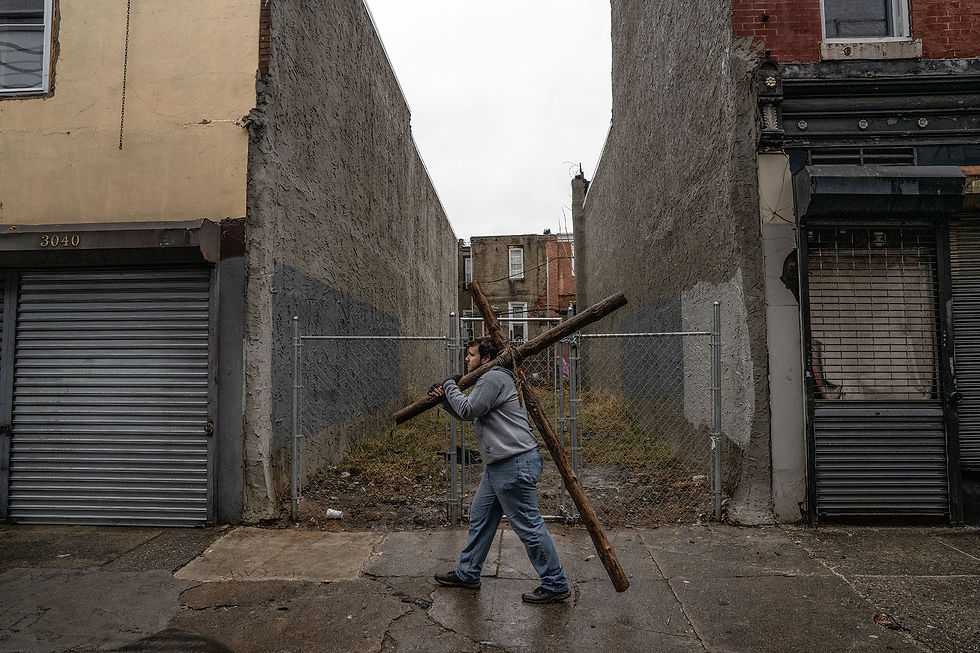
1. Your Kensington series grew out of your return to Philadelphia, the city where you were born and raised. What was it about the neighborhood that compelled you to begin photographing there, and what did the experience ultimately reveal to you?
Actually, I returned to Philadelphia deliberately to do the work in Kensington. The reason is because I had always wanted to photograph the area and do street photography there, but I was especially motivated because my son, at the age of eighteen, began to have a serious drug problem. He’s since gotten clean. He’s in a top liberal arts school called Swarthmore in Pennsylvania. He got himself together, but that experience led me to really look at how many young people there were in Kensington. I was devastated by my own experience with my son, and I felt that a lot of the scenes I was seeing in Kensington were really important to record in an ethical and artistic way so that I could bring the story home — so that I could tell the story of Kensington.
There are a lot of videos being done on the streets — surreptitious videos — which I don’t think really tell the story. The work changed me a tremendous amount. I was assaulted while I was working there. I’ve been shot at. I had a concussion from the assault, and I think that I had some PTSD afterward.
I feel that the experience of photographing there really made me question how we photograph other people and aspects of street photography that I think are really important: candid aspects, where you have to take pictures and you don’t ask permission, because if you ask permission for every picture, then things change. But in a place like Kensington, you have to ask. I have many pictures that are candid where I didn’t ask, but I began to really question the ethics of photographing people in distress. That includes war photography — all kinds of photography where we’re photographing dead bodies or people in distress.
For a while, I shied away. I didn’t want to do it anymore, but now I’ve doubled down on it because I think it’s really, really important to continue. There is just too much sanitization in social media and corporate media. Street photography in general is pretty lighthearted, and that’s not an accurate reflection of how a lot of people live. Although initially I questioned a lot of photography of other people after Kensington, I’ve now basically come full circle, and I’m doubling down on photographing reality.

2. You came to photography after working as a figurative artist, discovering street photography almost unexpectedly during a trip to Europe in 2015. How did that transition change the way you look at people, places, and everyday life?
I don’t think being a photographer really changed the way I look at everyday life. I think I’ve always looked at everyday life however it is that I look at it. I don’t really know how I look at it, but I think photography has made me notice everything in a way that I never did. I notice everything on the sidewalk. I notice a lot of details that most people don’t see. I tend to notice very, very small interactions between people, and I think even the smallest interactions are really worthy of a photograph.
I photographed today on Skid Row — guys in a doorway. They were just coming — well, they were drug dealers — but they were coming in and out of the doorway, and I just shot them. I wasn’t really supposed to be shooting them, but I had gotten permission from them to shoot right there. I got them in these really odd moments and movements. They make a lot of abrupt, sudden movements when they move through space, and I caught them in this doorway in these really unusual motions. So I notice things like that.
I didn’t used to see everyday life as an opportunity to be creative, but it’s not something I really think about, so I can’t really say how it’s changed how I see things. I think what it’s done is given me an opportunity to record the way I see things — the way I’ve always seen things.
3. Across your work — from street photography to longer-term bodies of work — you seem drawn to places where many different stories coexist. What makes a place or situation become photographically compelling enough for you to return to it?
Places have electricity. Places have a vibe. They just have a feeling, and I can’t really put into words what that feeling is. But in general, places that I want to photograph have something to say that’s more than what you see on the surface. There could be a social issue, whether it’s drugs, or it’s just a really forgotten corner of a place, or a place that’s kind of rough and isn’t photographed. I like going to places that, in a way, are almost untouched.
I think, for me, what draws me to a place is a visceral feeling of total reality — humanity. I don’t necessarily like places that are overly refined, where everybody’s on their cell phone, everything’s upscale, and everything’s shiny and modern. You might be able to do some shadow-and-light pictures in places like that, but I find that a lot of those places are overphotographed. They’re overdone.
New York City — I can’t take another picture in New York City. I’m so bored. A lot of times when I was in New York, I wasn’t even bringing my camera with me. It’s like being in a fishbowl, literally full of fish, where the water is full of droppings from other fish. I just feel like I’m in a dirty bathtub — like dirty bathwater, like recycled water — being in a place like New York.
I like to be in places that have a lot of secrets and definitely have a lot of layered stories. You can walk down the street in Los Angeles in some neighborhoods, and so many things happened before you got there that you’ll never know, but there’s still a feeling in the air. I guess somehow I sense that.
4. You describe photography as a form of visual narration. When you edit your photographs into a series, how do you decide what belongs together and what needs to be left out?
I started on Instagram by putting a photo series up. When Instagram allowed us to put ten slides, I started to put together these little poems that were made of pictures. I started doing that, and now there are a lot of people doing it, but everybody has their own way of deciding.
For me, I like to first of all, of course, include pictures that are good, because a lot of the pictures that we take aren’t very good, or there will be something wrong with the composition. But I like to have different aspects of a scene or different aspects of a person. A lot of things that I do, I don’t think about. I’m not analyzing each picture. It’s how I feel. It’s my instinct about what I felt at the time and what pictures show that.
Then I will sometimes try to sequence them. If there was a little story, it could be sequential according to time — when something happened. But mostly, it’s just how I felt about where I was and which pictures reflect that and are also good — reasonably good.

5. After more than a decade of photographing, what are you most interested in exploring now that you weren't when you first picked up a camera?
I’m basically doing the same thing that I did when I picked up a camera, which is telling stories that a lot of people don’t know are happening around them — telling stories about things that I think need to be illuminated. I am telling stories that aren’t pretty, so that hasn’t changed. However, I think the way I do it has changed. I think that my compositions are different. I always run on instinct, but I’m trying not to plan the compositions as much as I used to. In other words, I used to like to have everything perfectly calibrated within the frame, but now I think that some randomness is okay.
Quite honestly, if anything, I’m doubling down on what I used to do before. For a long time, I got away from the dirty, ugly stuff. I just kind of got stuck in neutral after Kensington. But I feel this is what is most important: telling stories that are hard to look at and telling stories that need to be told because something is happening that shouldn’t be happening.
So, as I said before, I’m kind of doing what I always did. I get ideas, and I shoot a lot of pictures that never see social media. I have many, many pictures that I just don’t share, because I’m not always crazy about social media. I prefer to get things published. But no, I don’t think I’ve changed, actually. I’m more the same than I was before, if that makes sense.

Is there anything you would like to add that we haven’t touched on in this conversation?
I think your questions were really good. The only thing I would like to add is that I think it’s really important that photography separates from social media. Social media is ruining — I feel — is ruining street photography. I think it’s become really formulaic. I think people are really focused on engagement and likes. They’re repeating themselves. We’re all repeating ourselves. It’s not possible to continually innovate, but social media encourages repetition. It encourages safety, and it rewards images that are clever, as opposed to meaningful.
Actual content should be emotional content, narrative content, historical, social images that tell the story of the way life is — images that are not derivative from someone else’s work or derivative from our own work. Social media does not encourage us to take real risks. A real risk might be telling a story that not a lot of people want to hear, or just telling a story that people don’t expect from you. It could be a story that people want to hear, but maybe your audience expects something from you that you’ve always given them.
I think a lot of photographers will tend to give people what they think they want, because taking a risk means a drop in engagement. So I would say to anybody reading this that it’s really critical to take personal and artistic — well, not personal-safety risks if you’re not comfortable with that. I do that, but that’s not what I meant. What I’m trying to say is: take artistic risks and sort of separate your photography from social media — and maybe even stop looking at photography on social media.


Comments